

Mind Your Language: The World Needs More Translation Games

Steven Landray
Writer, So Many Games
Crouching beside the well, you see a distinct pattern carved into the side. Two lines flow along a gentle curve before cresting again in parallel, like waves on the ocean. As the player, you choose what this word could mean based on the context, guiding protagonist Aliya to the correct answer. Water.
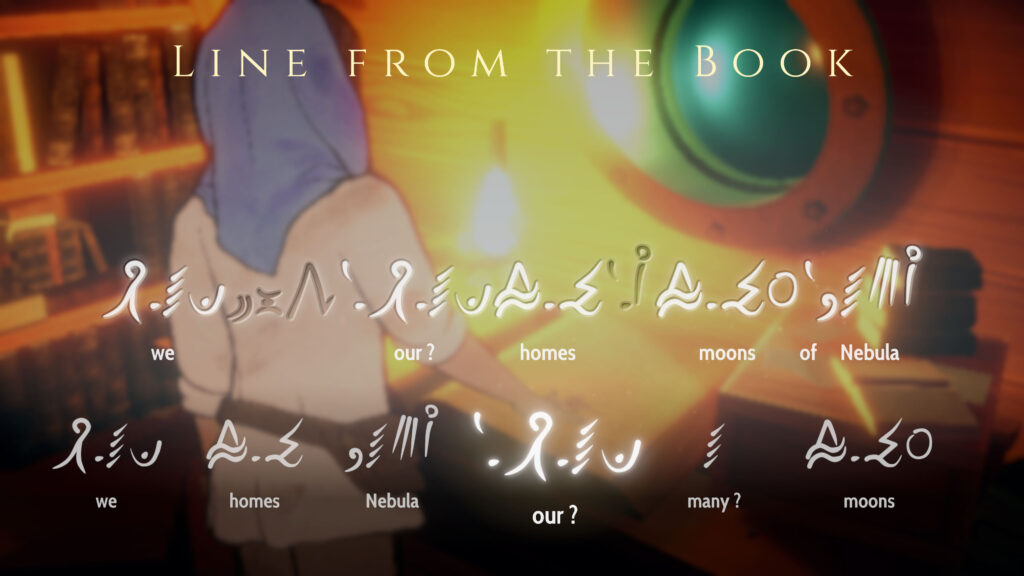
Heaven’s Vault is a game brimming with moments like this, where you are given every ounce of context you could need but never the answer; each new discovery opens the door to more mysteries in the path ahead, but I’m not here to talk about the story that underpins Aliya and Six’s little interplanetary romp but instead about those dandy little symbols you learn to read through the course of the game.
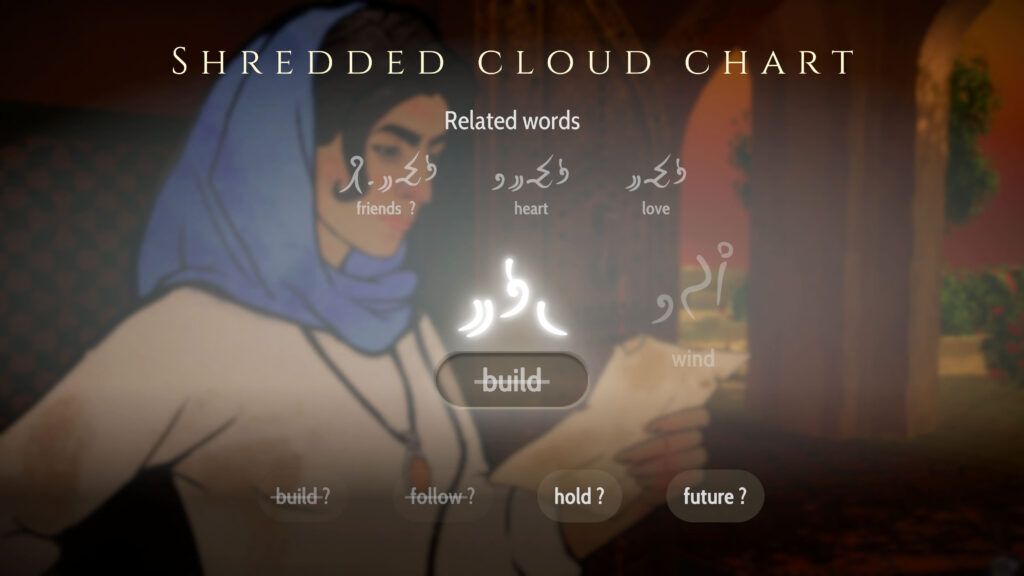
If you have ever scoured the forums for Heaven’s Vault, you may have seen a tsunami of notebook screenshots and debates about syntax, with entire paragraphs written in the fictional language of the world – there’s a great deal of community spirit in this collective translation effort, but the game goes to great lengths to make sure your logic and reasoning are entirely your own – you may influence the direction Aliya takes or the conclusions she makes, but how can you ever truly know you were right?
In an interview with Samuel Guglielmo at TechRaptor, inkle co-founder Joseph Humphrey gave a stark insight into what makes the language and deductive reasoning in Heaven’s Vault unique:
“It’s these woolly ideas that, when you pull them together, help you make a solution, but you’re never quite sure. I love that feeling, because it really did replicate the same feeling that I had when learning real human languages.”
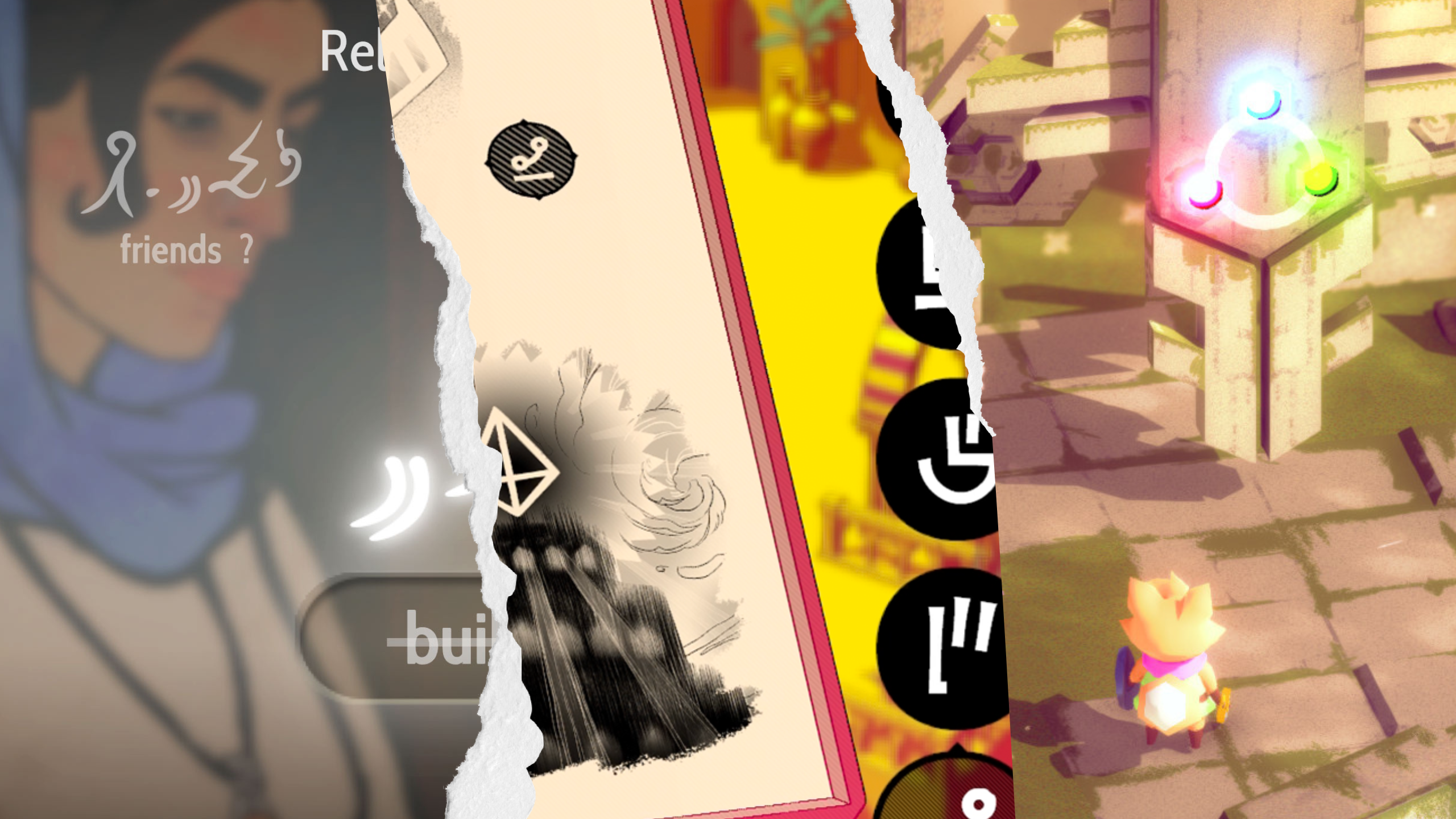
This approach to making obtuse puzzle-solving is something that makes the largely unexplored genre of translation games so inviting, something that would be amplified four years later with the release of Chants of Sennaar.
Unlike Heaven’s Vault, the multiple languages spoken and written in Chants of Sennaar are not dead or long forgotten, instead being used by people across the different floors of the towering structure you are climbing – you are instead tasked with learning facets of the language to allow you to proceed, learning phrases and collating notes until you are able to effectively communicate with those around you. This shift from archaeology to sociology is an important one, as your deductions do have a concrete answer but also have a direct impact on those around you.
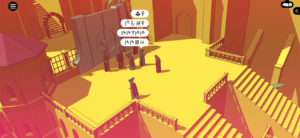
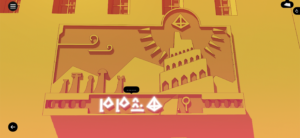
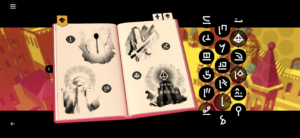
Each floor of the tower blindly worships the one above, unable to communicate between themselves as a result of the language barrier; as you decode each word and phrase, you will use the environment to learn how they interconnect – the sign on a store teaches you how to use plurals, and the hieroglyphic nature of the different languages means that each one has a unique numbering system that can be parsed over time. Much like Heaven’s Vault, there’s as much of an element of reading your environment as there is logic to it, but what happens when the language is secondary to the game itself?
Released in 2022, Tunic purported to be a cutesy Zelda-like dungeon adventure, which sees you control an adorable fox who is tasked with collecting six macguffins that are needed to complete the game. This at a surface level is what you’ll spend most of your time doing, but the real draw of the game is an in-game manual that is pieced together from scraps found throughout the world – this taught valuable mechanics and abilities through imagery, with the game being largely textless, or more accurately, not having any conventional text.
Throughout Tunic you will find strange glyphs that act as the language of the world, littered across signs and filling in the gaps of your manual as you progress – these appear at first to be garbled nonsense, but much like anything on the internet, if you give smart people nonsense, they will decipher it in record time. Soon it became apparent that, although not a necessity, the language has a clear structure of its own, based largely on the English phonics system in which each vowel and consonant represents a sound rather than an individual letter.
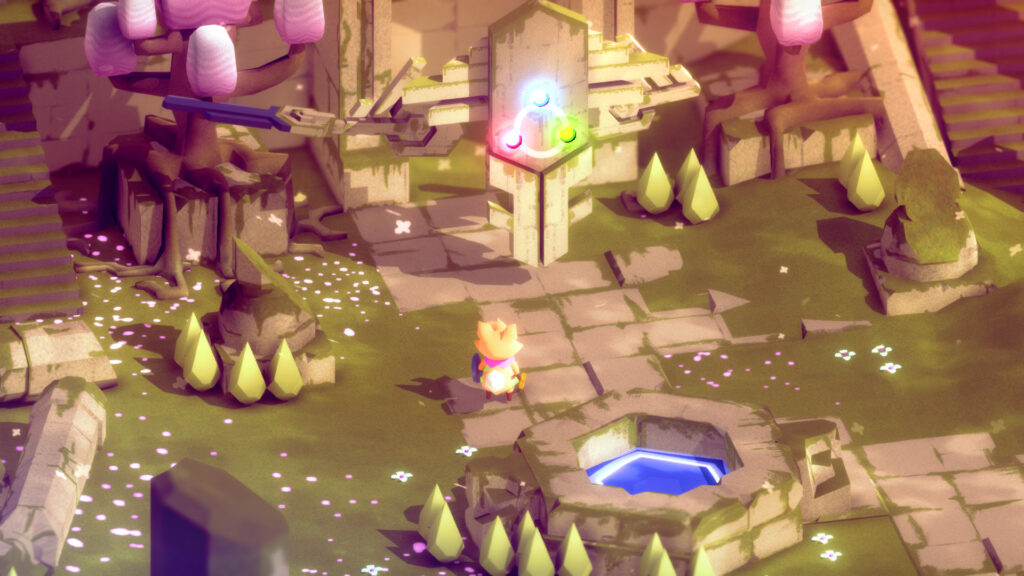
Suddenly this opened up even more information about the game and its lore, with previously unintelligible information becoming as clear as day and the deeper lore implications of your journey being laid bare. For most this was an extra challenge hidden within the game, with the sole reward being information (and of course bragging rights), but it also wasn’t the first of its kind.
Created by prominent indie developer Phil Fish (whose real name is Philippe Poisson, a fact I relearnt while researching this article to my amusement), Fez is a game about 2D creatures living on a 2D plane until one day you receive a magic fez that allows you to change perspective and see the other sides of your 3D world. Not only was the journey to create this astounding game a main feature of Indie Game: The Movie, it was also a game that has such incredible staying power that it remains popular even to this day.
Some of the puzzles present in Fez were extravagant at times, requiring layers of meta problem-solving ranging from QR codes to sequence inputs, but the biggest challenge of all was intertwined in a fictional language that certain people would use – taking the form of squares with a series of lines imprinted on them in certain rotations, the language can be decoded in a single room featuring two animals at play: a dog and a fox.
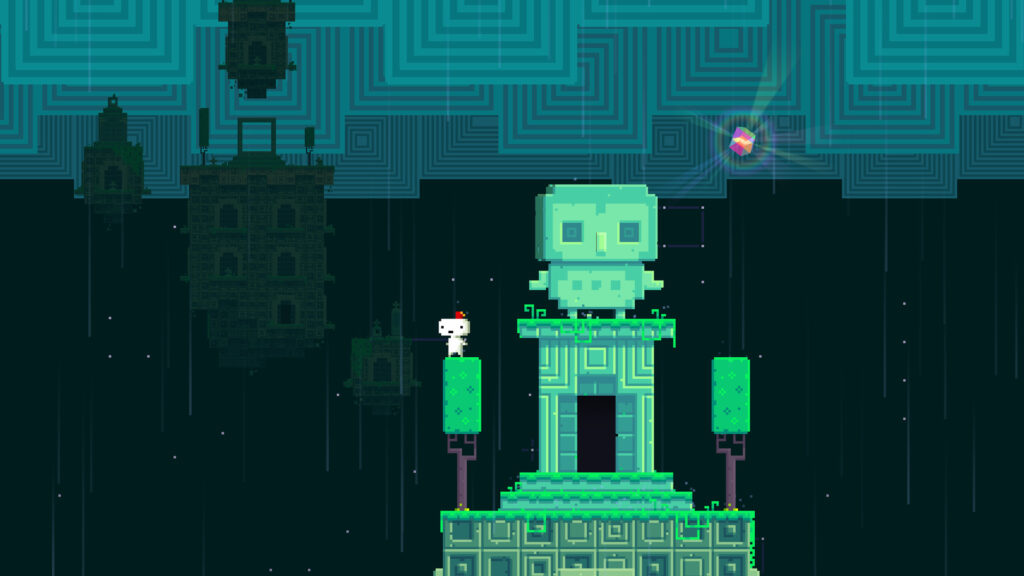
Any fans of the English language will already have guessed that this scene, accompanied by the glyphs, provides you a complete alphabet with the use of the phrase “the quick brown fox jumps over the lazy dog”, a common pangram that allows you to walk away with a complete translation of the language and therefore be capable of working out other puzzles in the world. It’s certainly more important in the context than Tunic but still provides an extra layer of challenge.
Fictional languages have such a broad range of applications in modern games, both as a core to their gameplay and a supplement for the more observant; it would be foolish to say games were the originator of fictional languages, with many notable examples throughout media history ranging from Star Trek’s Klingon to J.R.R. Tolkien’s Elvish, but what they all have in common is community – people come together to pool their knowledge, learn everything they can about this made-up series of letters or runes, and then begin writing and speaking the language as though it were a normal part of their day.
At the beginning of this article I mentioned the forums for Heaven’s Vault and the prevalence of notebook photos or paragraphs made in the language – this is at the heart of what makes these games so great. It’s not just about solving the puzzles of the game; it’s about creating wonderful new puzzles to share with others in the know – you may crouch by a well and discover the word for water, but it’s the community surrounding it that teaches you how to turn it into prose and poetry.
About the Author
With over a decade of game review experience under his belt, Steven Landray has produced and hosted various radio shows for both Radio Scarborough and Coast and County Radio including The Evening Arcade. He may have left the microphone behind, but his love of indie games will never fade away. You can follow Steven for more thoughtful gaming content on Bluesky.
About So Many Games
So Many Games is an online gaming publication featuring reviews and articles from a passionate team of writers. In addition to the articles found on their site, they also publish a biweekly newsletter filled with exclusive content and a roundup of articles and upcoming game releases. You can also check out the So Many Games podcast for even more thoughtful game discussions and developer interviews.
Check out So Many Games on the following platforms:
About No Small Games
No Small Games is an indie game recap and review podcast brought to you by hosts Kate and Emily! They became friends while streaming on Twitch and bonded over their love of indie video games. In each episode of No Small Games, the two will discuss an indie game they both played independently. They’ll compare their experiences: the good, the bad, their most memorable moments of their playthroughs.
Learn more about the podcast and its hosts on the About page. You can find all our episodes here on the Episodes page, or listen on Spotify, Apple Podcasts, or wherever you get your podcasts.