



Letter Lost Impressions
Come rain or shine, or cognitive-distortion-inducing fog, the Kharnym Isle Postal Office is here to serve.

I think it’s not uncommon to fantasize about the quiet, steady routine of life as a postal worker. At least I don’t think I’m alone in daydreaming about sorting and delivering mail, waving to neighbors as I pass through their cul-de-sac. (Of course, I’m also very aware that the reality for USPS workers these days is very different.) Letter Lost, developed by FlatNine Games, was initially intriguing to me purely on the basis of being a post office simulator. But it’s 2026 and creepy cozy games are in, so I was doubly excited to learn the game has a sinister undercurrent and light horror elements.
Letter Lost begins as you, the player, open your eyes to discover you’ve been sleeping in a dungeon cell. After a quick tutorial to show you how to move about the space and interact with objects, you emerge from the dungeon only to find that it leads up to a cozy, if a bit unsettling, post office. An ominous ring of the phone introduces you to Liv, your snarky manager, who explains your new duties running the postal services for Kharnym Isle, a mysterious and isolated island community. Thus begins your quest to find answers and discover a way to escape your clerical confinement.
Letter Lost in Action
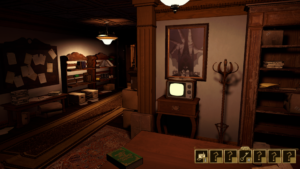
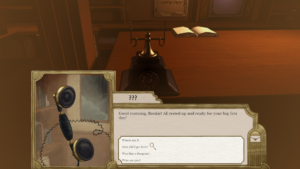
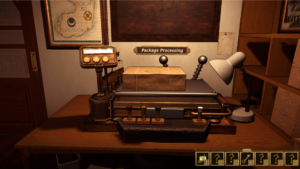
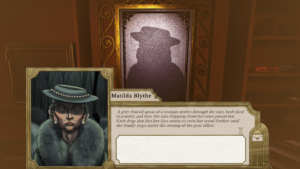
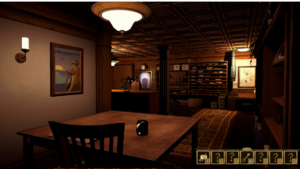
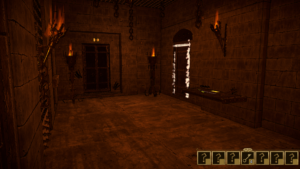
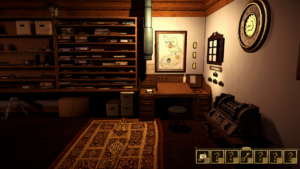
Letter Lost takes place on the mysterious Kharnym Isle, an island perpetually enveloped by a thick fog, the physical manifestation of the daze that seems to be slowly consuming all of its residents. Townsfolk approach the post office service window throughout the day in various states of cheerfulness or concern, sometimes even anger, but always with some level of underlying confusion about how they arrived or what they came for. Trying to ask questions and dig into the source of their bewilderment usually only seems to agitate them, and most seem content to go about their day pushing aside questions like “how did I get here?” and “why did I want to mail this letter in the first place?”
Creepy, in a kind of soothing way
Both the island and the post office itself radiate a simultaneously cozy and macabre aura, which I personally love and reminds me of one of my favorite illustrators of all time, Edward Gorey. Gorey’s subjects often appear calm, with an almost comforting air to them, in spite of the horrific events unfolding around them.
Besides the Kharnym Isle residents who come to the window, one of the only other touchstones with the outside world is the radio conveniently located in the center table of the office. The local Kharnym news affiliate is a source for all kinds of bizarre and disturbing updates, cheerfully and matter-of-factly read by the upbeat anchor. From townsfolk being magically bricked into their own homes until no one ever heard from them again, to construction workers being lulled into a deadly sleep, listening to the news left me with more questions than answers about what is happening on this cursed island.
This is a narrative game disguised as a workplace simulator (or maybe it’s the other way around), with similar elements to Papers, Please and other titles within that microgenre. Ostensibly, your primary objective is to process the mail: stamp letters according to their city of destination and feed them into the correct chute, stamp and scan packages and load them onto the mail truck. As you proceed through the game, these simple tasks become more complex and require careful attention to detail, as more special rules get added to the process each day. Some days, for reasons unbeknownst to us, certain townships get banned from receiving mail and all letters addressed to them must be stamped “Return to Sender.” Other days all letters headed to a particular area must be opened before getting stamped and sent. Failure to track and comply with these ever-shifting requirements results in a pay deduction.
While there are in-game reasons to keep up appearances and continue doing your postal duties, the “true” game revolves around solving the mysteries of Kharnym Isle, its residents, and why you’re currently being held hostage as the island’s postmaster.
While there are in-game reasons to keep up appearances and continue doing your postal duties, the “true” game revolves around solving the mysteries of Kharnym Isle, its residents, and why you’re currently being held hostage as the island’s postmaster. As I went about my daily tasks and talked with townsfolk, I started to uncover hidden clues throughout the conversations and the office itself. Some of these clues (which included words, codes, physical keys, and more) connected immediately to the mysteries at hand, while others felt independent of anything that had happened, and I stashed those away for later. In general I felt the game telegraphed which clues pertained to which puzzles fairly well, in a way that neither felt heavy-handed nor so oblique that I ever felt permanently stumped.
Game loops inside of game loops
Structurally, Letter Lost is built like an onion, with several layers of game loops of escalating sizes. The smallest of these is the day loop. Every day at the Kharnym Isle post office, you’ll wake to the usual flashes of lighting outside your window then head downstairs for your postal duties. Then we have the week loop, which is where the structure of the game itself becomes a puzzle to solve.
After your first week on the job, you may be shocked to find out two things: 1) even though you’re being held captive as the island’s postmaster, you do in fact get a day off, and 2) the week seems to start all over again each Monday. On the first day of each week you awake fresh from your dungeon cell and climb the stairs to discover it’s once again your very first day on the job. Suddenly the mystery of how to escape the Kharnym Isle post office becomes inextricably intertwined with the question of how to escape this cursed time loop.
As you experience several weeks, you’ll discover that some story events tend to happen on the same day every week, like phone calls from your caustic boss, or visits from specific residents. But in spite of the apparent time loop, you’ll also discover that some things do change. Some of the residents’ storylines eventually do reach a conclusion and don’t come back around. You may also experience changes within the office itself over time. This is where we get into the larger game loop, which are the phases or chapters of the game.
Letter Lost Trailer
Once you’ve completed all of the storylines for a given phase (which usually includes several townsfolk quests and a main quest), the game begins to evolve in a variety of ways at the start of the next week. That said, you might wind up playing through the same phase for multiple weeks if you can’t tie all the loose ends in time.
This process is where my one big complaint about the game design lies. As you complete some, but not all, of the resident quests in a given phase, the completed ones won’t come back up again. Those residents will stop returning over and over with their requests or quandaries. But if you haven’t figured out all the puzzles to complete your main story quest for that phase, you can wind up in situations where you have to play through an entire extremely bland week featuring virtually zero narrative elements. This happened to me at least once and was a bit of a frustrating experience, although it did help me to understand the structure of these weekly phases.
While I haven’t yet hit credits, I have enjoyed my 14 hours in Letter Lost so far and look forward to continuing my quest to escape from the Kharnym Isle post office. Not only do the mysteries escalate as you progress, the horror elements do as well. The whole experience of working alone in this creepy building is already plenty unsettling, so I think FlatNine Games set themselves up well to create a very haunting conclusion to the game.
Emily was provided with a review key of Letter Lost by Nerder She Wrote
About No Small Games
No Small Games is an indie game recap and review podcast brought to you by hosts Kate and Emily! They became friends while streaming on Twitch and bonded over their love of indie video games. In each episode of No Small Games, the two will discuss an indie game they both played independently. They’ll compare their experiences: the good, the bad, their most memorable moments of their playthroughs.
Learn more about the podcast and its hosts on the About page.