


Pluto Review
A wizard is never late (to his niece’s birthday party), nor is he early.

The past few years feel like they’ve been both the best and the worst time to be a fan of roguelite deckbuilders. Every time I open Steam I spot cards and dice, and cards that roll dice, and dice that turn into cats that play cards. Ok, the last one might be an exaggeration, but it’s not far off and honestly I’d probably check it out. While there’s an abundance of new roguelites dropping every week, in many ways it feels like swimming in a sea of sameness. We need an influx of deckbuilders that distinguish themselves from the pack in both aesthetic and game design.
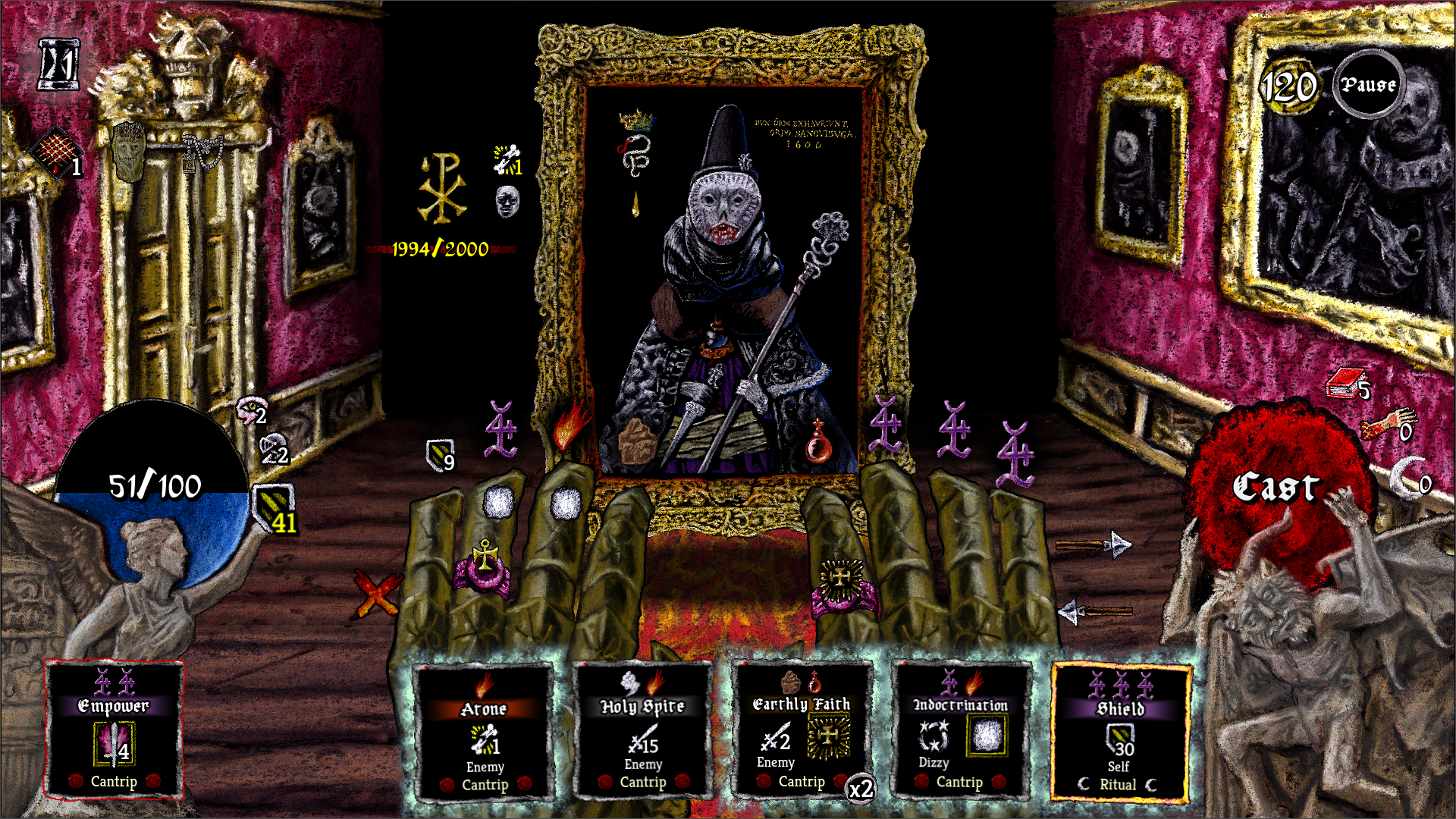
Pluto, the debut title from Siege Wizard Interactive, has arrived on the scene to deliver a grotesque and strangely compelling fantastical world, ready to rip you away from the neverending vector art dice and cards (kicking and screaming, if necessary). Monstrous creatures stare out at you from the Steam store page, with gaunt eyes and gnashing fangs. The game’s hand-drawn art looks like it might have been plucked from the sketchbook of a Renaissance monk with a vivid imagination and an unhealthy obsession with the book of Revelations. But like, in the best way possible. Pluto is so eye-catching that when I first ran across it, I forgot to even check what the genre was or what the gameplay might be like. It was gorgeous and gruesome and I knew I wanted it, whatever it was.
Pluto in Action
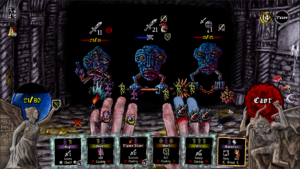
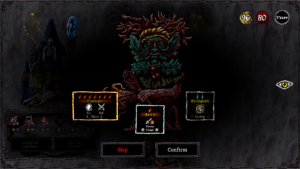
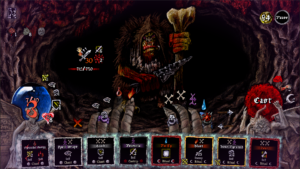
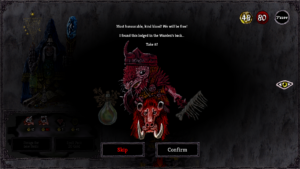
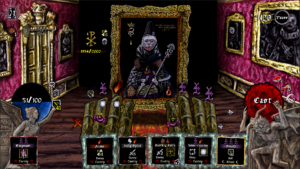
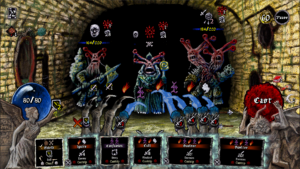
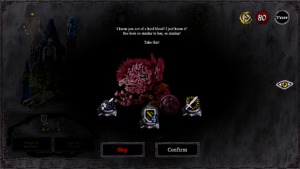
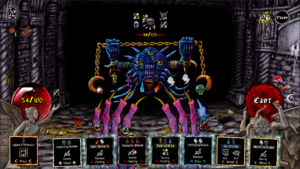
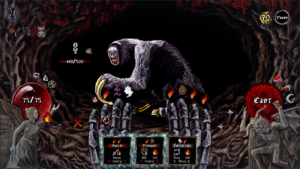
Pluto’s bizarre appeal is more than skin deep, however. In the game you play as a powerful wizard who has been imprisoned for some kind of (surely very gnarly) wizard crimes. You must fight your way out of prison using your elemental spellcasting, in an attempt to get to your niece’s birthday party on time. Equipped with a deck of elemental-based spells, you channel your powerful moves through your fingers. To cast a spell, you place it across your hand, assigning one element to each of the fingers it occupies.
Where this gets interesting and strategic is when you have spells that share a portion of the same pattern of elements. As long as the patterns match identically, you can overlap spells together to maximize your buffs, damage dealt, damage blocked, etc. in a single turn. In some ways, this felt a bit reminiscent of the role patterns play in the turn-based combat of the 2024 roadtrip RPG, Keep Driving.
Not just some conjurer of cheap (deckbuilding) tricks
One of the greatest strengths in Pluto’s deckbuilding gameplay is how it lets you forget for a moment that you’re playing a deckbuilder. This is a genre that can become so abstract that any amount of worldbuilding just becomes cosmetic. One day I’m playing the dumpster-diving-raccoon-flavored roguelite deckbuilder and the next day I’m picking up the geriatric-monarchs-playing-basketball flavor. The gameplay loops might be fun, but over time it’s hard not to feel like I’m just drawing cards and playing cards, with bursts of dopamine in between. I love that Pluto makes your deck of spells feel tangible and like it truly belongs inside the world of the game. I’m not just drawing cards, I’m flipping through my spell book to find the right concoction of elemental sigils to etch onto my long, crusty wizard fingers. And that’s special.
The ability to optimize your turn by overlapping matching patterns of elements adds a level of depth to the strategy that I appreciated. Of course you need to consider what actions will be most effective given your enemies’ next moves (which the game displays for you), but there are so many other factors that determine the success of a turn. Spells execute from left to right, so you’ll want to consider how the order creates opportunities for synergies. Then there’s the space-saving potential of overlapping spells, which allows you to cast more in a turn. In addition, each finger has a default passive effect, which executes if the finger is left empty, and more can be added by equipping magical rings.
I love that Pluto makes your deck of spells feel tangible and like it truly belongs inside the world of the game. I’m not just drawing cards, I’m flipping through my spell book to find the right concoction of elemental sigils to etch onto my long, crusty wizard fingers. And that’s special.
I’m eternally grateful that, as you set up your spells to cast that turn, the game calculates the outcome of your intended actions in real time before you lock everything in. A lot can happen in a round and the mental math required to sort it all out myself is beyond even my cunning wizard mind.
Systems of a downfall
While Pluto really shines in the depth of strategy of its gameplay, at times the depth is also its downfall. One of the biggest pitfalls of designing a roguelite deckbuilder, especially one with a lot of personality and inventiveness, seems to be the inescapable desire to create new systems and special new terms for all the concepts that drive them. Siege Wizard clearly gave a lot of thought to the tooltips they created to explain special terms used in the spell descriptions. However, it started to feel like maybe the systems design and its jargon had gone a little overboard when the tooltips suddenly had tooltips of their own.
Similarly, when I began to unlock new characters, I was excited to discover new playstyles, but felt a little daunted when the game was suddenly introducing me to a host of brand new concepts and special terms that weren’t even remotely familiar from the first few rounds. I felt a bit like I was now trying to learn the game all over again from scratch, when I was hoping to build and expand off the knowledge I had acquired in earlier runs. Clearly someone on the development team has a passion for designing systems, and I want to clarify that I don’t think that these are poorly crafted at all. I just think there may be too many good ideas here to be contained in a single game.
Wizard hands are hard to hold
Another much more minor qualm for me, but one that I think would benefit the developers to consider as they work on future updates and patches to the game, is that the current UI and control scheme doesn’t lend itself well to handheld gameplay. I’m a huge fan of my Steam Deck, and there’s nothing like firing up a good roguelite while in a horizontal position on my couch. And I know I’m not alone in preferring a handheld experience from this genre. Slay the Spire, Balatro, and even action roguelites like Vampire Survivors and BALL x PIT have found success in launching their titles on mobile.
Pluto Trailer
Unfortunately for Pluto, I think it has a long way to go before it’s ready for a big debut on the small screen. I fired it up on my Steam Deck and found the gamepad controls so confusing that I resorted to using the touchscreen and ultimately decided to switch back to my PC. Other factors like the fact that the text is incredibly small and displayed in a stylized font would make Pluto’s UI difficult to discern on a smaller device even if the controls were set up for it. This particular point won’t factor in meaningfully to my ultimate assessment, but I do think it’s worthy of the devs’ consideration.
Looking at the rapidly growing genre of roguelite deckbuilders, Pluto represents some great qualities that we need more of right now. Its eye-catchingly grotesque aesthetic and singular personality are more than just a gimmick. They come together to support Pluto’s wizardly take on the turn-based deckbuilder gameplay, in a way that makes you feel like you’re doing more than just drawing and playing cards. While Pluto stands out from the crowd in many ways, its weaknesses are relatively representative of the genre. It overextends itself with systems and terminology that makes getting into the game (or progressing) feel like a significant mental lift. In my opinion, though, it’s a small price to pay for the well-worth endeavor to expand on what a roguelite deckbuilder can be.
Get to the point, girl
Emily’s Score: 7/10
Emily was provided with a review key of Pluto by Stride PR
About No Small Games
No Small Games is an indie game recap and review podcast brought to you by hosts Kate and Emily! They became friends while streaming on Twitch and bonded over their love of indie video games. In each episode of No Small Games, the two will discuss an indie game they both played independently. They’ll compare their experiences: the good, the bad, their most memorable moments of their playthroughs.
Learn more about the podcast and its hosts on the About page.